
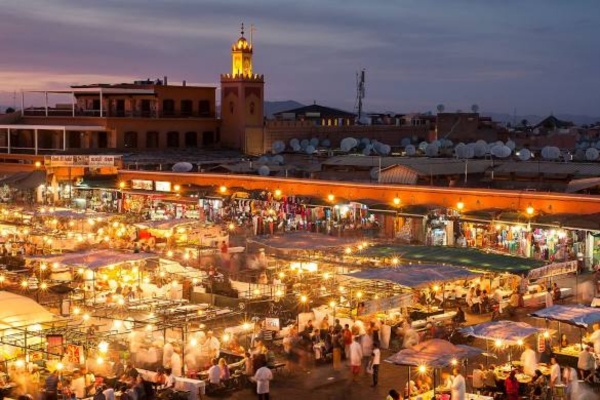

A trip from Agadir to Marrakech is one of the most popular ways to experience two very different sides of Morocco in a short time.
Agadir is known for its Atlantic coast, wide beaches, modern promenade, relaxed atmosphere, and sunshine. Marrakech feels completely different. It is busier, older, more intense, and full of historic streets, traditional markets, gardens, palaces, food stalls, and cultural landmarks.
For many visitors staying in Agadir, Taghazout, Tamraght, or the Souss-Massa region, Marrakech is the perfect place to discover Morocco’s famous “Red City.” However, it is important to plan the day realistically.
The journey from Agadir to Marrakech is long enough that visitors should not expect to see every attraction in one day. The best experience comes from choosing a few important places, spending time in the medina, enjoying the atmosphere of Jemaa El Fna, and leaving enough time to walk without rushing.
This guide explains what to expect on the journey, what to see in Marrakech, how to organize your time, and whether a day trip is the right choice for you.
Is a Day Trip From Agadir to Marrakech Worth It?
Yes, a day trip from Agadir to Marrakech can be worth it, especially for visitors who have limited time in Morocco and want to see one of the country’s most famous cities.
The trip is ideal for travelers who enjoy history, architecture, local markets, Moroccan food, photography, and lively city atmosphere. Marrakech is very different from Agadir, so it gives visitors a broader view of Morocco beyond the coast.
However, it is not the best option for travelers looking for a slow and relaxed day. The total travel time can be significant, and Marrakech itself is full of places worth exploring.
A day trip works best for visitors who want an introduction to Marrakech. An overnight stay is better for people who want to visit museums, gardens, palaces, rooftop cafés, hammams, restaurants, and hidden corners of the medina without checking the time.
What Is the Road From Agadir to Marrakech Like?
The journey from Agadir to Marrakech usually takes around three hours each way, although the real travel time can be longer depending on traffic, weather, rest stops, and where you are staying.
The route passes through changing landscapes. You leave the coastal area around Agadir and travel through open countryside, hills, agricultural land, and inland Moroccan scenery before arriving in the Marrakech region.
The road itself is part of the experience, but it is important to set expectations correctly. This is not a mountain road filled with major sightseeing stops every few minutes. It is mainly a travel route between two destinations.
For this reason, visitors usually enjoy the journey most when they treat Marrakech as the main focus of the day rather than trying to create too many stops between Agadir and Marrakech.
A short rest stop for coffee, water, breakfast, or a toilet break is useful, especially before arriving in the city.
The Best Way to Spend One Day in Marrakech
A good one-day visit to Marrakech should focus on the historic centre and avoid trying to cover too much.
The most satisfying plan is usually:
- Start with the Koutoubia Mosque area
- Explore the old medina
- Visit one major historical site, such as Bahia Palace
- Walk through the souks
- Take a break for lunch
- Spend time around Jemaa El Fna
- Enjoy the square later in the afternoon or early evening before returning
This kind of itinerary gives visitors a real feeling for Marrakech without turning the day into a race between attractions.
The city is best experienced on foot once you are inside the old medina. Cars cannot enter many of the narrow streets, and walking is part of the experience.
Start at the Koutoubia Mosque Area
The Koutoubia Mosque is one of Marrakech’s best-known landmarks. Its tall minaret can be seen from different parts of the city and acts as a useful point of reference when walking around the medina.
The area around the mosque is a good place to begin because it is close to Jemaa El Fna and the main historical centre. Visitors can take photos from the outside, walk through the gardens nearby, and get their first impression of Marrakech’s red-coloured architecture.
The Koutoubia area is also useful for orientation. From here, it is easy to continue toward Jemaa El Fna, the souks, the Kasbah district, or the old palace areas.
Try to arrive early in the day if possible. The light is softer, temperatures are usually more comfortable, and the busiest parts of the city are easier to explore before the middle of the afternoon.
Visit Bahia Palace for Moroccan Architecture
Bahia Palace is one of the most interesting places to visit in Marrakech for travelers who enjoy traditional Moroccan design.
The palace is known for its decorative tilework, painted wooden ceilings, interior courtyards, gardens, carved plaster, and detailed architectural craftsmanship. It gives visitors a chance to see the artistic side of Moroccan historic buildings away from the noise of the market streets.
A visit to Bahia Palace is especially worthwhile for first-time visitors because it helps explain the beauty and detail behind Moroccan architecture. The palace is not just about one large room or one famous photo spot. The appeal comes from moving slowly through the courtyards, doors, ceilings, mosaics, and quieter corners.
It is usually better to visit early, before the hottest part of the day and before crowds increase.
Opening times, entry prices, and access conditions can change, so visitors should check practical information close to their travel date.
Walk Through the Marrakech Medina
The medina is the heart of Marrakech. It is a maze of narrow streets, small shops, workshops, cafés, riads, markets, food stalls, mosques, and historic buildings.
Walking through the medina can feel overwhelming at first, especially for visitors arriving from the quieter atmosphere of Agadir. That is part of what makes Marrakech memorable.
The best approach is to stay relaxed and accept that getting slightly lost is normal. The medina is not designed like a modern city with wide streets and clear signs everywhere. It is a place to walk slowly, notice details, and explore.
Inside the medina, visitors may see artisans working with leather, metal, wood, textiles, spices, lamps, carpets, pottery, and traditional Moroccan clothing.
It is better to avoid trying to buy everything immediately. Take time to look around, compare shops, and enjoy the atmosphere first.
Explore the Souks Without Feeling Rushed
The souks of Marrakech are among the most famous markets in Morocco. They are full of colour, movement, sounds, and local craftsmanship.
Visitors can find Moroccan lanterns, handmade leather goods, rugs, slippers, ceramics, spices, perfumes, clothing, jewellery, baskets, and decorative items.
The best way to enjoy the souks is to think of them as an experience, not only a shopping place. Even visitors who do not plan to buy anything can enjoy walking through the different sections and seeing the variety of local products.
It is normal for shop owners to invite visitors inside or begin conversations. A polite “no thank you” is usually enough when you are not interested.
For anyone planning to buy something, take your time. Prices are often negotiable in traditional markets, and it is useful to compare quality and price before making a decision.
Experience Jemaa El Fna During the Day and Evening
Jemaa El Fna is the best-known square in Marrakech and one of the city’s most important places to experience.
During the day, the square can feel busy but relatively open. You may see fruit juice stalls, small food stands, local sellers, musicians, performers, henna artists, and people moving between the medina streets.
Later in the afternoon and evening, the atmosphere changes. More food stalls appear, the square becomes busier, lights come on, and the energy increases.
This is why many visitors enjoy Jemaa El Fna most near sunset or in the early evening. The square feels more alive, and the surrounding rooftops offer views over the city as the light changes.
However, visitors should also stay aware of their belongings in crowded spaces. Keep phones, wallets, and bags secure, especially when walking through busy areas.
The square is not a quiet sightseeing spot. It is loud, active, sometimes chaotic, and full of different experiences happening at the same time. That is exactly why it is one of the most memorable places in Marrakech.
Take a Break for Moroccan Lunch
After walking through the medina and visiting one or two historical places, lunch is an important part of the day.
Marrakech offers many options, from simple local restaurants to rooftop terraces overlooking the medina. Visitors can try Moroccan classics such as tagine, couscous, grilled meats, salads, pastilla, harira soup, fresh orange juice, mint tea, or Moroccan pastries.
For a day trip, it is better not to spend too long searching for the “perfect” restaurant. Choose a clean place with a menu you understand, take a proper break, drink water, and save energy for the afternoon.
The hotter months can be especially tiring in Marrakech, so lunch is also a good time to rest in the shade or indoors.
Should You Visit Jardin Majorelle on a Day Trip?
Jardin Majorelle is one of Marrakech’s most famous gardens. It is known for its blue walls, cactus gardens, exotic plants, pathways, fountains, and peaceful atmosphere.
It can be a beautiful addition to a Marrakech visit, but it is not always the best choice for a one-day trip from Agadir.
The garden is outside the main medina area, so visiting it takes extra time. If your day is already limited, it may be more satisfying to focus on the medina, Bahia Palace, Koutoubia, and Jemaa El Fna instead.
Jardin Majorelle is a better choice for visitors staying overnight in Marrakech or for those who have already visited the medina and want a quieter, more relaxed experience.
For a first visit from Agadir, do not feel disappointed if you skip it. Marrakech has enough to see inside the old city.
What Visitors Often Get Wrong About a Marrakech Day Trip
The biggest mistake is trying to visit too many attractions.
Marrakech may look small on a map, but moving through the medina takes time. Narrow streets, crowds, heat, photo stops, shopping, traffic, and finding entrances can slow down the day.
Another common mistake is expecting Marrakech to feel like Agadir. Agadir is open, coastal, and relatively calm. Marrakech is more intense, more crowded, and more traditional in its layout.
Visitors should also avoid planning the day around too many shopping stops. The souks are interesting, but spending hours negotiating for souvenirs can mean missing the architecture, history, food, and atmosphere that make the city special.
The best Marrakech day is not the one with the longest checklist. It is the one where visitors have enough time to walk, observe, eat, take photos, and enjoy the city without stress.
What to Wear and Bring for Marrakech
Comfortable clothing and shoes make a major difference in Marrakech.
The medina has uneven streets, crowded alleys, stairs, and long walking sections, so comfortable walking shoes are essential. Light clothing, sunglasses, sunscreen, and a hat are useful during warm weather.
It is also important to carry water, especially in spring and summer. Marrakech can feel much hotter than Agadir because it is inland and does not benefit from the same Atlantic breeze.
A small crossbody bag or secure backpack is practical for carrying personal items. Keep valuables close in crowded areas.
For visiting religious or traditional areas, respectful clothing is recommended. There is no need to dress formally, but visitors usually feel more comfortable with modest and breathable clothing.
Is One Day Enough for Marrakech?
One day is enough to get a strong first impression of Marrakech.
You can see the Koutoubia area, walk through the medina, visit Bahia Palace, explore the souks, enjoy Moroccan food, and experience Jemaa El Fna. That is already a full and memorable day.
But one day is not enough to see everything.
Visitors who stay overnight can explore Jardin Majorelle, Ben Youssef Madrasa, the Saadian Tombs, the Mellah district, modern Gueliz, museums, hammams, rooftop restaurants, and gardens at a slower pace.
For visitors based in Agadir, the best mindset is simple: use the day trip to discover the energy of Marrakech, not to complete every attraction.
Agadir and Marrakech: Two Different Morocco Experiences
Agadir and Marrakech complement each other very well.
Agadir offers beaches, ocean views, relaxed cafés, surf culture, and easy access to the Souss-Massa region. Marrakech offers history, architecture, markets, old streets, traditional food, and a deeper immersion into Moroccan city life.
Experiencing both places helps visitors understand how diverse Morocco can be.
A day from Agadir to Marrakech is not only about changing location. It is about moving from the Atlantic coast to an imperial city shaped by centuries of trade, art, culture, and everyday life.
For travelers who want to see more than the beach, Marrakech is one of the most rewarding places to include during a stay in southern Morocco.
0 Comment